Skip to Content


Hartford Boating Accident Lawyer
Boating Accident Lawyer Hartford, CT
 If you have been injured in a boating accident on the Connecticut River, Candlewood Lake, or Long Island Sound, you may be dealing with medical bills that are piling up, time away from work you cannot afford, and an insurance company that has no interest in paying what your claim is actually worth. Boating injuries tend to be far more severe than typical car accident injuries because there are no seat belts, no airbags, and no protective barriers between a passenger and the water.
Brown Paindiris & Scott, LLP has practiced law in Connecticut since 1977, and our attorneys bring more than 100 years of combined personal injury experience to boating accident cases. Our Hartford, CT boating accident lawyer represents people who have been hurt because of someone else’s negligence on the water, and we offer free consultations for all boating injury matters.
Why Choose Brown Paindiris & Scott for Boating Accident Cases in Hartford, CT?
 Attorneys Who Try Serious Injury Cases
 Attorneys Who Try Serious Injury Cases
Bruce Newman graduated from Albany Law School in 1989 and concentrates in personal injury, wrongful death, medical malpractice, product liability, and class actions. He is licensed in Connecticut, California, and New York, with admissions to the U.S. Court of Appeals for the Second and Ninth Circuits. Attorney Newman was named a Top 100 Lawyer by the National Trial Lawyers from 2013 through 2017 and is a lifetime member of the Million Dollar Advocates Forum.
Stephen Sobin practices out of the firm’s Hartford office and has trial verdicts on both the plaintiff and defense sides, which gives him an advantage in anticipating how the other side will approach a case. Attorney Sobin concentrates in personal injury, wrongful death, medical malpractice, and premises liability, and his settlements since 2021 alone exceed $20 million. Before joining the firm, he worked as outside defense counsel for local and national insurance companies. He attended Providence College and graduated from the University of Connecticut School of Law in 2012. He was named a Connecticut Super Lawyers Rising Star from 2021 through the present.
What We Have Recovered for Clients
Our firm has helped clients recover millions of dollars across personal injury, wrongful death, and related matters. Boating accident injuries are frequently catastrophic, ranging from traumatic brain injuries and spinal cord damage to propeller-strike amputations and drowning. The compensation our clients need reflects how severe their injuries actually are, and we pursue every dollar available under the law.
How We Investigate Boating Accident Cases in Hartford
We begin every Hartford boating accident case with a thorough investigation into the operator’s license and training, the vessel’s maintenance records, whether alcohol was a factor, and whether any boating regulation was violated. When the facts call for it, we retain accident reconstruction professionals and maritime safety consultants. Evidence in boating cases tends to disappear quickly because boats are repaired, GPS data gets overwritten, and conditions on the water change daily.
What Our Clients Say
⭐⭐⭐⭐⭐
“My father and I would like to express our sincere gratitude to attorney sean peoples and the rest of the firm. Sean is absolutely amazing. Sean is extremely honest, very, very caring and knows the law like no other.” — Larry Golden
Read more reviews on our Google Business Profile.
Types of Boating Accident Cases We Handle in Hartford
 The Connecticut River runs through the Hartford area, and Candlewood Lake, Lake Zoar, and Long Island Sound draw thousands of boaters each season. Accidents take different forms depending on the vessel, the waterway, and the cause.
-
Boat collisions. Speed, operator inattention, alcohol use, and failure to observe right-of-way rules cause the majority of vessel-on-vessel crashes on Connecticut waterways. The central question in these cases is which operator breached their duty of care, though both operators sometimes share responsibility.
-
Propeller injuries. Contact with a spinning propeller can cause deep lacerations, amputations, and death. Depending on the circumstances, the operator may be liable, the boat owner may be liable, or the manufacturer may bear responsibility if the vessel lacked adequate propeller guards.
-
Drowning and near-drowning claims. When an operator’s negligence puts a passenger in the water without a life jacket, the consequences are often fatal. Wrongful death claims arising from drowning accidents must be filed within strict time limits, and the physical evidence on the water needs to be preserved immediately.
-
Boating under the influence accidents. Operating a vessel while intoxicated is illegal under Connecticut law and is one of the leading contributors to fatal boating accidents nationwide, according to U.S. Coast Guard data. An intoxicated operator who injures someone faces criminal prosecution and a civil lawsuit at the same time.
-
Personal watercraft crashes. Jet skis are fast, they handle differently than boats, and the people operating them often have limited experience on the water. Collisions involving personal watercraft can produce broken bones, spinal injuries, and traumatic brain injuries that require months or years of treatment.
-
Water skiing and tubing injuries. The operator towing a skier or tuber owes specific duties of care, including maintaining a proper lookout and keeping a safe speed. High-speed falls, collisions with the tow vessel, and contact with docks or fixed objects can cause back injuries and head trauma that may be permanent.
-
Commercial vessel accidents. Tour boats, charter fishing operations, and ferries on Connecticut waterways must comply with both state boating regulations and U.S. Coast Guard requirements, and injuries on commercial vessels sometimes bring federal admiralty law into the picture.
-
Trailer accidents on the highway. Towing a boat on Connecticut’s roads changes a vehicle’s stopping distance, handling, and visibility in ways that lead to serious crashes. When a boat comes loose on the highway or a car accident occurs because of an improperly secured trailer, motor vehicle accident law applies but with additional factual and legal complexity.
Connecticut Legal Requirements for Boating Accident Claims
C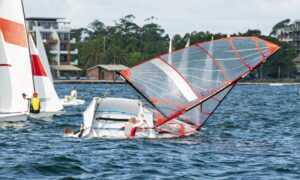 onnecticut regulates recreational boating through Chapter 268 of the General Statutes, and the Department of Energy and Environmental Protection administers those laws. Several provisions have direct bearing on personal injury claims that arise from boating accidents.
C.G.S. § 15-133 sets out the rules for safe vessel operation in Connecticut, including the prohibition on operating a boat under the influence of alcohol or drugs. A violation of this statute is admissible in a civil injury case as evidence of negligence, and the penalties on the criminal side include fines, imprisonment, and suspension of the operator’s safe boating certificate.
Under C.G.S. § 15-132, an operator involved in a collision must render assistance to the other vessel and its passengers, exchange identification and registration information, and remain at the scene until it is clear that no further help is needed. If an operator leaves the scene without doing those things, the statute creates a legal presumption that the collision was caused by that operator’s own wrongful conduct.
Reporting requirements are also strict. Under C.G.S. § 15-149a, any accident involving death, injury, or the disappearance of a person from a vessel must be reported to the nearest law enforcement agency immediately and to the Commissioner of DEEP in writing within 48 hours.
The statute of limitations for boating injury claims is governed by C.G.S. § 52-584, which provides two years from the date the injury is first sustained or discovered, along with a hard three-year outer limit measured from the date of the negligent act. If the accident results in a death, C.G.S. § 52-555 gives the estate two years from the date of death to file a wrongful death claim, with a five-year maximum running from the act or omission that caused it.
Connecticut follows a modified comparative negligence system under C.G.S. § 52-572h, which means an injured plaintiff can recover as long as their share of fault does not reach 51 percent. Below that threshold, the award is reduced in proportion to the plaintiff’s fault. A jury that finds a boating accident victim 20 percent responsible and awards $500,000 would reduce the verdict to $400,000. This same rule applies in premises liability cases and every other negligence action in Connecticut.
What Damages Are Recoverable in Hartford Boating Accident Cases?
 If you have been hurt in a boating accident near Hartford, Connecticut law allows you to pursue compensation across several categories, and in serious cases the total can be substantial.
Medical expenses are usually the largest component of a boating accident claim, including emergency treatment, hospitalization, surgery, rehabilitation, and the cost of any future care the injury will require. Lost wages and lost earning capacity are also recoverable. If the injury prevents you from returning to the type of work you did before the accident, the difference between your former earning potential and your current capacity is part of the claim.
Pain and suffering, emotional distress, loss of enjoyment of life, and the impact on your relationship with your spouse are all forms of non-economic damages that Connecticut juries can award. In boating accidents that result in permanent disfigurement, paralysis, or traumatic brain injuries, the non-economic portion of the verdict often represents the largest share of the overall award, and Connecticut does not place a cap on these damages in personal injury cases.
Punitive damages may be available when the operator’s conduct was reckless or wanton, such as operating a boat at dangerous speeds while intoxicated. Connecticut generally limits punitive damages in negligence cases to the plaintiff’s litigation costs and attorney fees, but they serve an important function in holding especially reckless defendants accountable.
When a boating accident kills someone, the decedent’s estate can file a wrongful death claim to recover damages for the decedent’s conscious pain and suffering before death, funeral and burial expenses, and the financial and emotional losses sustained by the surviving family members. Cases involving fatal boating injuries are among the most consequential matters we handle.
Contact Brown Paindiris & Scott, LLP
 If you or a family member has been injured in a boating accident near Hartford, CT, we encourage you to reach out soon so that we can begin preserving evidence and evaluating your claim. Boats get repaired or sold, GPS and engine data get overwritten, and witnesses become harder to locate as time passes.
We offer free consultations for boating accident injury claims and handle personal injury cases on a contingency fee basis, which means you do not pay attorney fees unless we recover compensation for you.
Contact us to speak with a boating accident attorney in Hartford, CT.
Boating Accident Statistics in Hartford
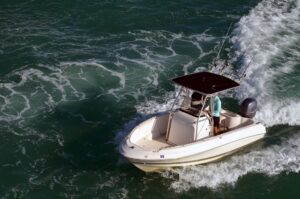 Boating draws thousands of people onto the Connecticut River, Long Island Sound, and the lakes across our region every summer. Accidents result in serious injuries. Most fatal boating accidents end in drowning rather than blunt trauma. The national water-injury data reflects common causes of boating personal injury cases.
-
Unintentional drowning kills roughly 4,083 people in the United States each year, according to CDC drowning data.
-
Roughly 8,111 people survive drowning but require emergency department treatment each year, and many are left with permanent brain injury.
-
For everyone older than 14, most drownings happen in natural water such as rivers, lakes, and the Sound, per CDC water-safety data.
-
Alcohol is one of the strongest known risk factors in both drownings and fatal boating crashes.
-
Nearly 80 percent of drowning victims are male, a disparity that holds across most age groups.
The harm behind these figures is largely preventable. Operator inattention, inexperience, excessive speed, and alcohol account for most serious crashes. When another party’s negligence causes a serious injury on the water. Connecticut law permits the injured person to hold that party accountable for the resulting losses.
What Steps Should I Take After a Boating Accident?
 What you do in the hours and days after a crash on the water shapes both your recovery and your claim. If you are able, work through these steps.
-
Get medical care right away. Adrenaline and cold water can mask a concussion or internal injury. Prompt treatment protects your health and creates the record that ties your injuries to the accident.
-
Report the accident. Connecticut requires operators to report crashes that involve injury, death, or a missing person. A timely report creates an official account while memories are fresh.
-
Identify everyone involved. Get the operators’ names, the vessel registration numbers, and insurance details, along with the contact information for every passenger and witness.
-
Photograph everything. Capture the vessels, the damage, the water and weather conditions, and your injuries before anything is cleaned up, repaired, or moved.
-
Preserve the boat and equipment. Evidence on the water disappears fast. Do not authorize repairs, and ask that the vessel, its engine, and any safety equipment be kept as they are.
-
Be careful with insurers. An adjuster may call within days. You are not required to give a recorded statement, and early words can be used to reduce what you are paid.
-
Keep your records. Save medical bills, proof of lost wages, and a simple log of how the injury affects your daily life.
-
Talk to a boating accident lawyer. The sooner counsel is involved, the more evidence can be preserved and the less room an insurer has to shift blame onto you.
Hartford Boating Accident Lawyer FAQs
 How much does a Hartford boating accident lawyer cost?
 How much does a Hartford boating accident lawyer cost?
We handle boating accident claims on a contingency fee basis, so there are no upfront costs and no attorney fee unless we recover compensation for you. The initial consultation is free, and there is no charge to learn whether you have a claim worth bringing. This arrangement allows an injured person to concentrate on recovery rather than legal expenses while the case proceeds.
Do I have a boating accident case?
You likely have a claim if someone else’s careless or reckless conduct caused your injuries. That can be another boat operator, an owner who let an untrained friend drive, a rental company, or the maker of a defective vessel. To learn what your options are, schedule a free case review, where we look at how the crash happened and who bears responsibility.
How long do I have to file a boating accident claim?
Connecticut allows injured people only a limited period in which to bring a claim, and that period generally begins at the time of the injury. Wrongful death claims are governed by their own separate deadline. Once the deadline passes, even a strong claim may be barred, which is why it is advisable to consult a Hartford boating accident lawyer promptly rather than waiting.
Who can be held liable for a boating accident?
More than one party often shares fault. Liability can fall on a negligent operator, the boat’s owner, a rental or charter company, a maintenance provider, or a manufacturer whose equipment failed. We investigate each possibility, because identifying every responsible party can mean the difference between a partial recovery and a full one.
What if I was partly at fault?
You can still recover in Connecticut even if you were partly responsible, as long as your share of the blame is not greater than the other side’s. Your compensation is then reduced by your percentage of fault. Insurers know this rule and use it to shift blame onto injured people, which is one reason careful investigation matters so much.
What is my boating accident claim worth?
It depends on the severity of the injury, the losses it causes, and the strength of the evidence. A claim can include medical bills, future care, lost income, reduced earning capacity, and pain and suffering. Catastrophic injuries and deaths carry the highest value. We can give you a realistic range once we review your records and understand the facts.
What if the boat operator had no insurance?
An uninsured operator does not necessarily foreclose a recovery. Compensation may still be available from the boat’s owner, a rental company, a manufacturer, or in some circumstances your own coverage. Boaters are frequently underinsured for serious harm, so we identify every available source of recovery rather than stopping at the operator’s policy.
Do you handle boating accidents that cause a death?
Yes. When a boating accident takes a life, the family can bring a wrongful death claim for medical and funeral costs, the loss of financial support, and the loss of the relationship itself. These are among the hardest cases a family will face, and we handle them with the care and the seriousness they demand.
What if I was injured while working on the water?
A deckhand, charter mate, or other worker hurt on a vessel may have more than one claim. Depending on the job, that can include a workers’ compensation claim alongside a personal injury case against a negligent third party. We sort out which rules apply so nothing you are entitled to gets overlooked.
What if a jet ski or personal watercraft was involved?
Personal watercraft handle differently than boats and are often driven by inexperienced operators, which makes crashes both common and severe. We treat these like other high-energy collisions, similar to how we handle a motorcycle accident, by reconstructing the impact and proving how the rider’s speed or inattention caused the harm.
What if the crash happened while towing the boat?
Not every boating injury happens on the water. When a trailer comes loose or a towing vehicle causes a wreck on the highway, the case is handled much like any other truck accident or roadway collision, with added questions about how the load was secured and who was responsible for it.
What other injury cases does Brown Paindiris & Scott, LLP handle in Hartford?
Boating is one part of our injury practice. We also represent people hurt in a bicycle accident, a pedestrian accident, or a scooter accident, along with dog bite injuries and cases where a surgical error makes an injury worse.
Important Resources for Hartford Boating Accident Cases
 Most Dangerous Locations for Boating Accidents in Hartford
 Most Dangerous Locations for Boating Accidents in Hartford
Risk near Hartford concentrates on a handful of busy waterways where traffic, current, and mixed vessel types raise the odds of a crash.
Rivers and open water:
-
Connecticut River. Heavy recreational and commercial traffic runs through the Hartford area, with strong current and shifting channels that inexperienced operators frequently underestimate.
-
Long Island Sound. Larger vessels, big wakes, and open-water conditions make collisions here more severe.
Lakes and reservoirs:
-
Candlewood Lake. The state’s largest lake draws crowds of boats and personal watercraft on summer weekends.
-
Lake Zoar and Bantam Lake. Narrower, busy waters where speed and inattention lead to close-quarters collisions.
What Are Important Local Resources for Hartford Boating Accidents?
If a boating accident near Hartford leaves you hurt, a few local resources can help while your claim moves forward. We list them for convenience only. We do not endorse any of them, and including them here does not create any affiliation.
-
Hartford Hospital. A Level I trauma center equipped for the most serious injuries. 860-545-5000.
-
Hartford Police Department. For non-emergency reporting and copies of records. 860-757-4000.
-
Connecticut DEEP Boating Division. The state office that oversees boating registration, safety, and accident reporting on Connecticut waters. 860-434-8638.
About Brown Paindiris & Scott, LLP
Since 1977, Brown Paindiris & Scott, LLP has represented injured Connecticut clients from its Hartford office at 100 Pearl Street and from locations across the state. The firm holds an AV Preeminent rating from Martindale-Hubbell, the highest peer rating for legal ability and ethical standards, and has been recognized in the U.S. News Best Law Firms rankings. Our partners bring more than a century of combined personal injury experience to serious-injury and wrongful death matters. The firm recently secured a $3.5 million settlement in a medical malpractice case.
Brown Paindiris & Scott, LLP Hartford Boating Accident Lawyers
100 Pearl St, Hartford, CT 06103
What Our Clients Say
⭐⭐⭐⭐⭐
“I want to express my deepest thanks to Sean Peoples. He is the consummate professional. I would highly recommend his services as a Personal Injury Lawyer. With over 25 years of experience, his display of knowledge and the ability to communicate with people is paramount. I want to thank him for all that he has done for me.”
Eric Dobbie
Read more reviews on our Google Business Profile.
Additional Resources for Hartford Boating Accident Cases
Contact Brown Paindiris & Scott, LLP
 If a boating accident near Hartford left you or someone you love seriously hurt, Brown Paindiris & Scott, LLP is ready to help. We offer a free consultation, and we handle boating accident claims on a contingency fee basis, so you owe no attorney fee unless we recover for you. Our personal injury attorney will review what happened, explain your options in clear terms, and move promptly to preserve the evidence your case depends on. Contact us to speak with a Hartford boating accident lawyer.

Schedule Consultation
Client Review
"I hired and worked with Attorney Sobin regarding injuries I received in a horrific accident. I found him to be honest and straightforward. He pursued my case diligently and won the maximum amount in my lawsuit. I highly recommend him for any personal injury case."
Dan R.